
Research Background
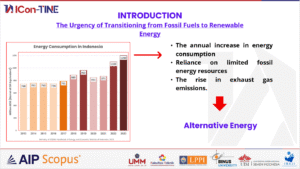
Global energy demand continues to rise every year, while dependence on fossil fuels leads to resource depletion and increased exhaust emissions. To address this challenge, biodiesel emerges as a renewable and eco-friendly energy source that can be directly used in diesel engines without modification.
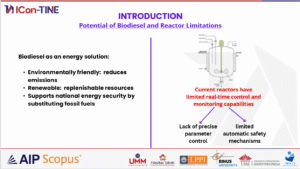
However, conventional biodiesel reactors still face limitations such as the absence of real-time monitoring, lack of precise parameter control, and minimal automatic safety mechanisms. These issues directly affect both product quality and production efficiency.
Proposed Solution
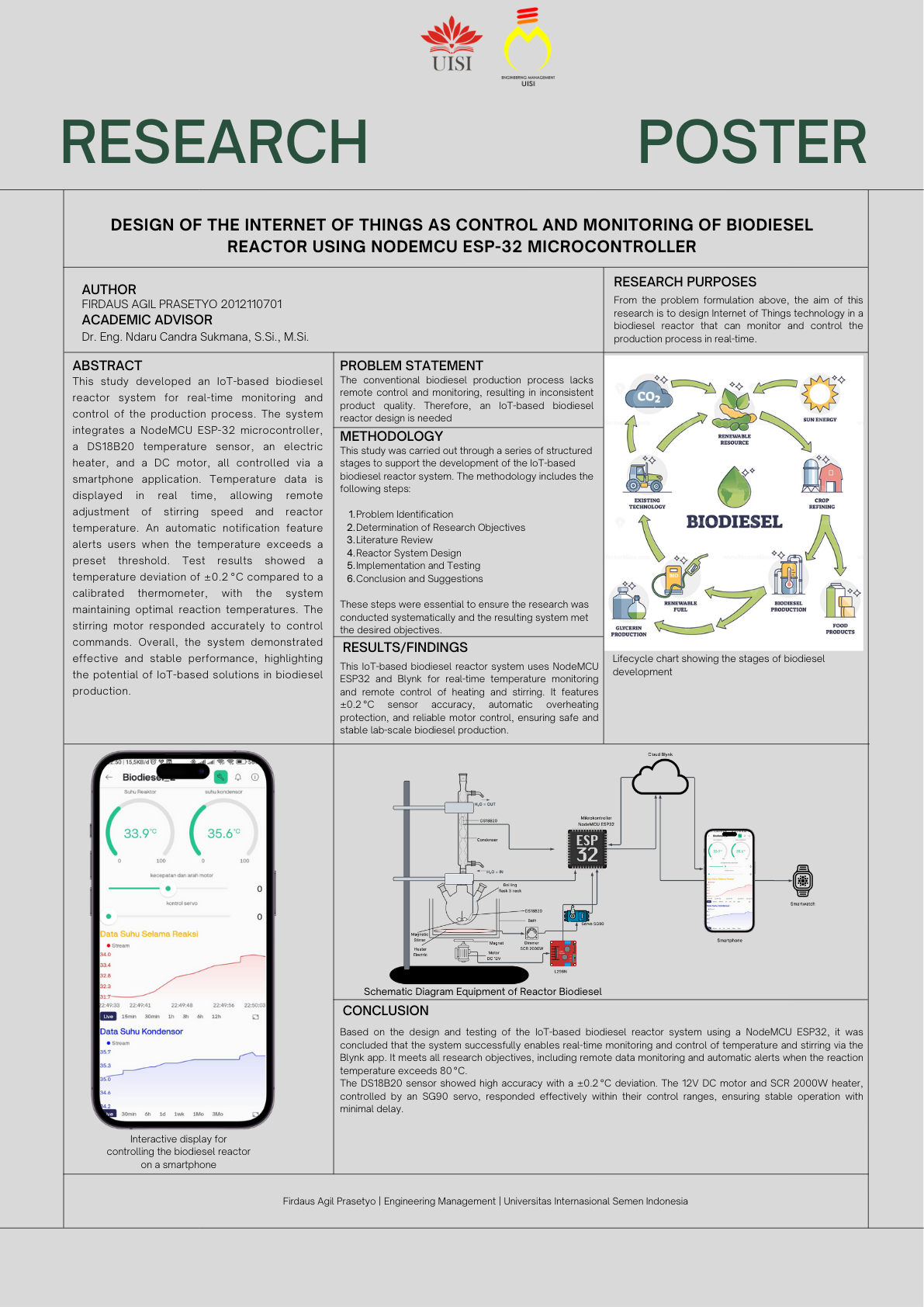
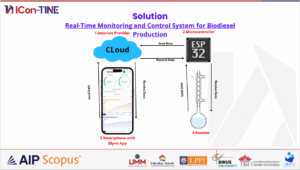
In this research, my team and I designed an IoT-based monitoring and control system for biodiesel reactors. This technology enables real-time monitoring of reaction parameters through smartphones, while also enhancing safety and efficiency.
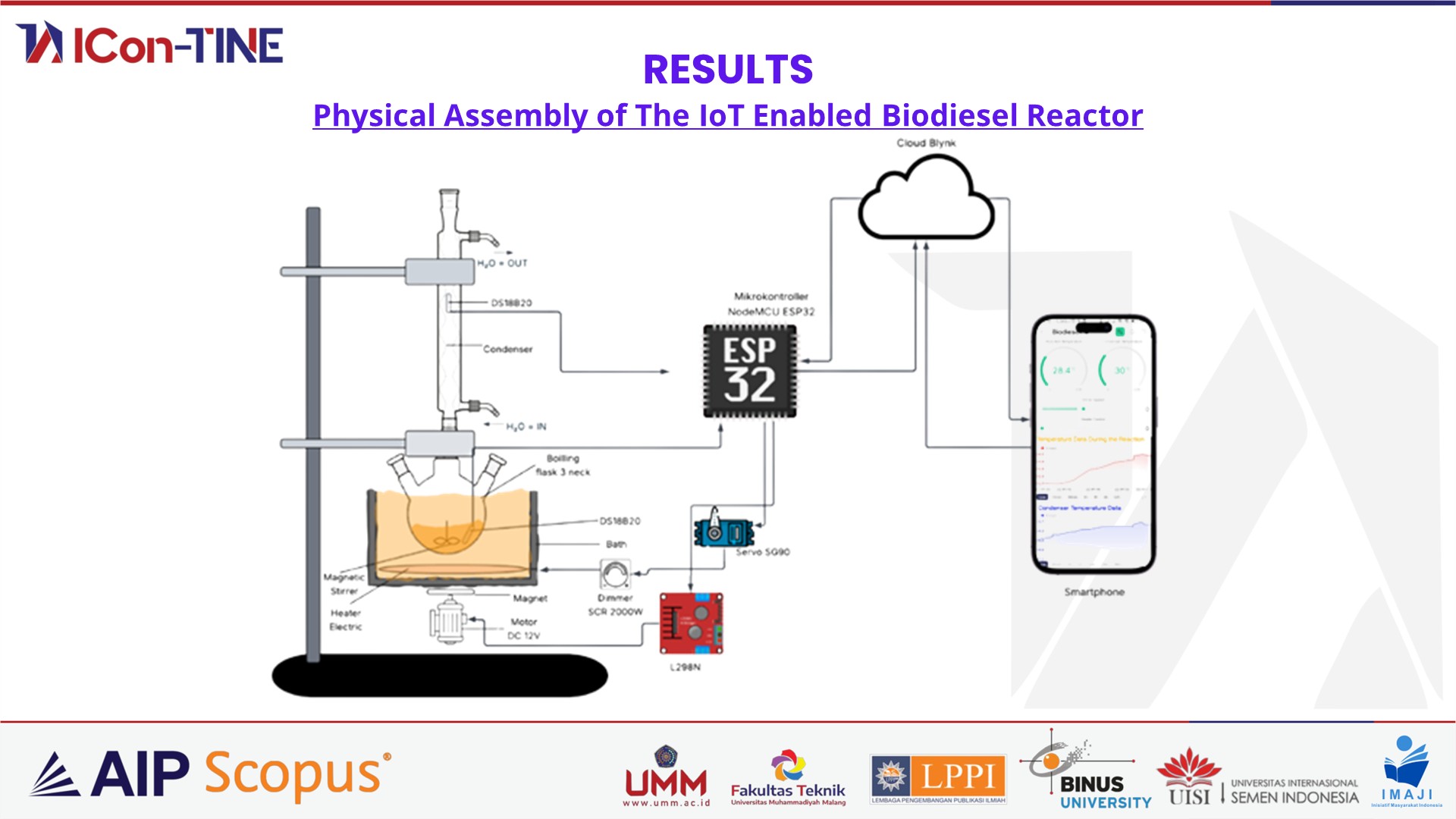
Key components used in the system include:
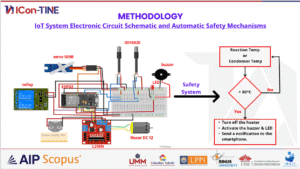
- + NodeMCU ESP32 microcontroller as the control center
- + DS18B20 temperature sensors for monitoring reactor and condenser temperatures
- + 12V DC motor + L298N driver for stirring
- + SG90 servo motor for heater intensity control
- + Relay, buzzer, and LED indicators as safety mechanism
- + Blynk platform as the smartphone-based monitoring interface
- + Powered basic
- + Trusted by millions
Methodology
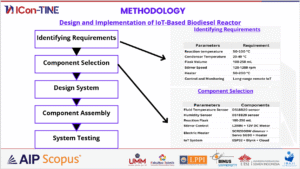
- Requirement identification – defining temperature range, flask capacity, stirring speed, and heating control.
- IoT system assembly – integrating sensors, actuators, and ESP32.
- Firmware development – programming with Arduino IDE and supporting libraries.
- System testing – evaluating sensor accuracy, actuator responsiveness, and Blynk interface performance.
Research Results
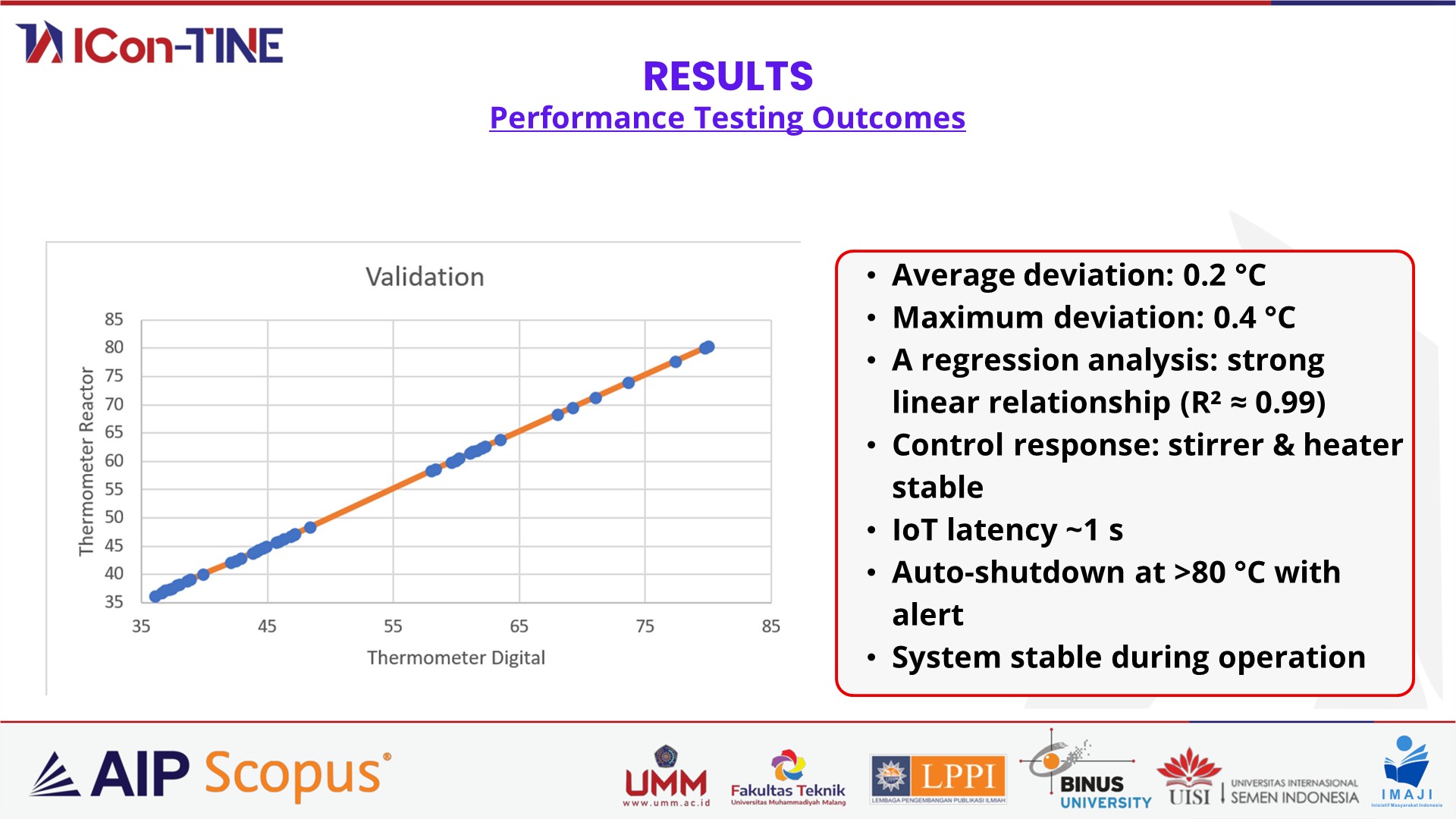
- High Accuracy: DS18B20 sensors showed only ±0.2°C deviation compared to a digital thermometer in 43 testing.
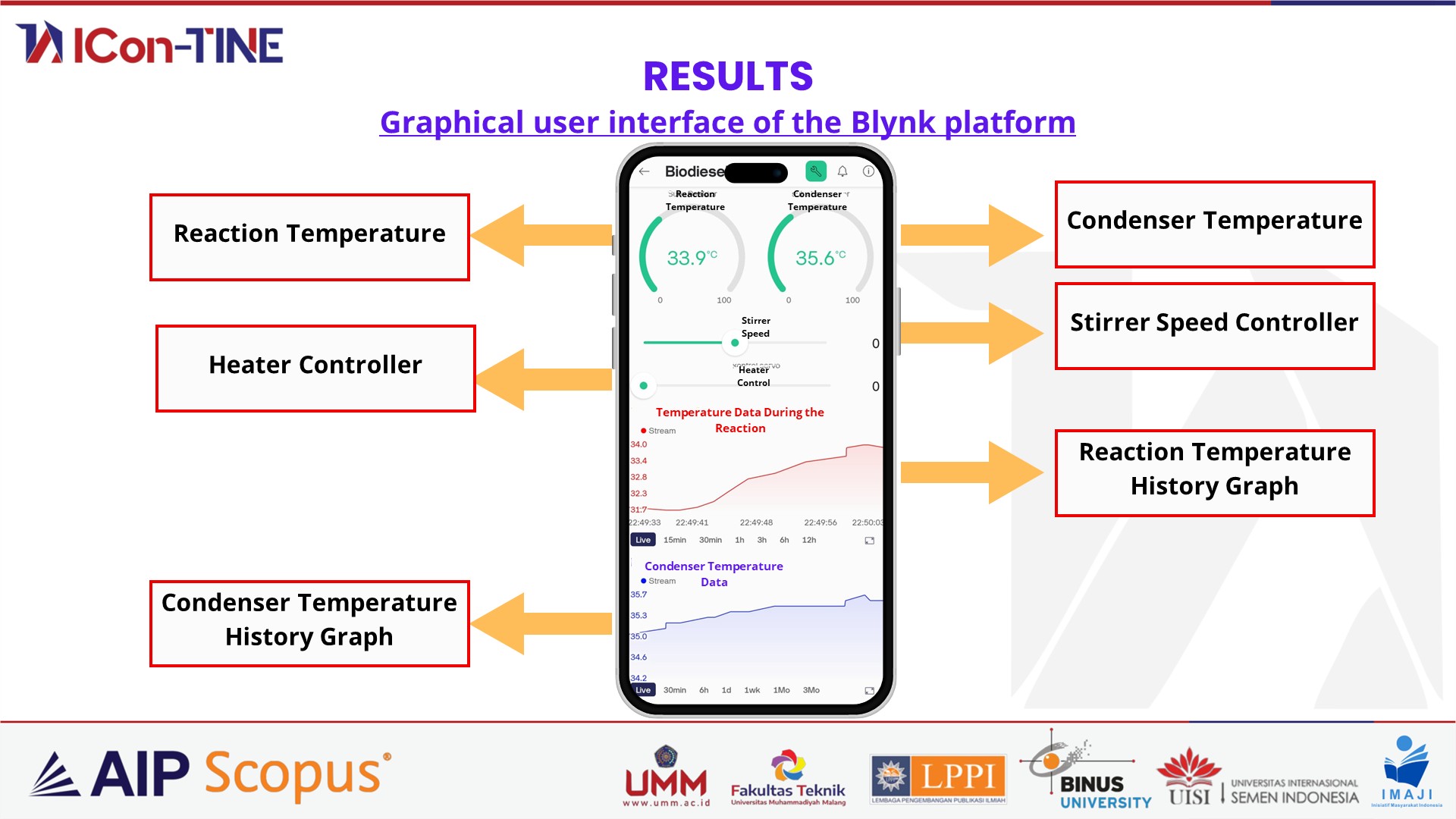
- Real-Time Control: Temperature and stirring speed data were monitored directly via Blynk with ~1 second latency
- Enhanced Safety: Automatic shutdown triggered when temperature exceeded limits, supported by buzzer and LED alarms.
- User-Friendly Interface: The Blynk dashboard displayed real-time temperature graphs and provided sliders to manually control stirring speed and heater intensity.
Conclusion
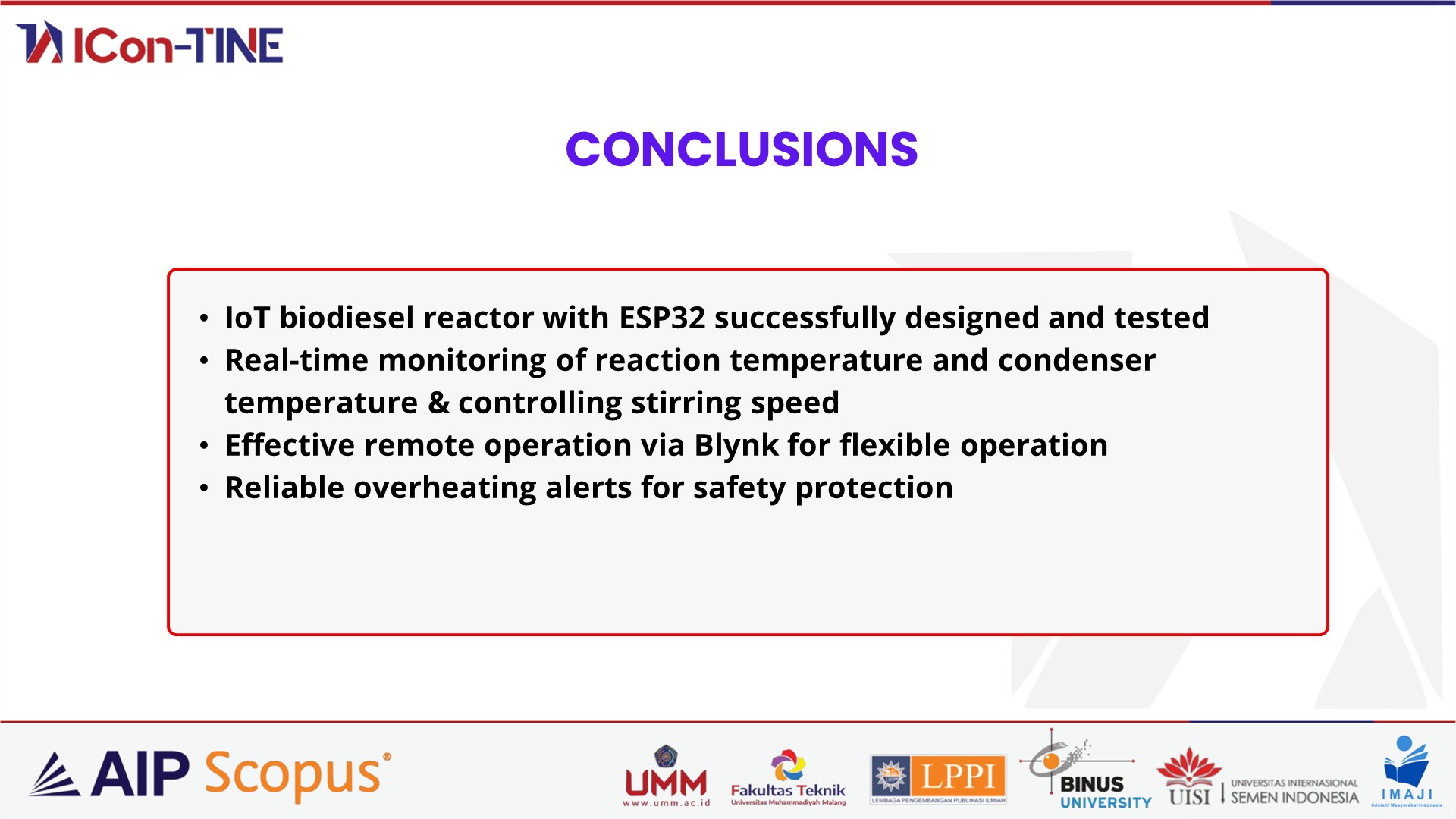
The integration of IoT into biodiesel reactors has proven to significantly improve efficiency, safety, and product quality. This system enables real-time monitoring, remote operation, and automated safety mechanisms, making it an innovative solution for renewable energy development.
Beyond laboratory scale, this design has the potential to be adapted for industrial applications and decentralized biodiesel production systems.